All blogs
All blogs
BookSpider
BookSpider
Ordering Management System WebApp
Turning a chaotic order-management system into a workflow users can grasp in under 5 minutes
How I transformed a 5.8%, adopted bookstore ordering system into a seamless operation, reducing delivery errors by 82% through strategic UX research and design.
5.8%
Initial App Usage
15
CS Calls/Week
82%
Delivery Errors
9Months
Project Timeline
My Role
UX Design Lead with Product Ownership
Product
Enterprize B2B SaaS web app
Team
Stakeholders, Product Leader, Front-end &
Back-end Developers, CS team, Logistics Team
Skills
UXUI Design, UX Strategy, Prototyping, Iteration Design, User Research & Competitor Analysis, Usability Testing
Users
Bookstore CS/Logisitc staff & Publisher staff
❋Summary
❋Summary
❋Summary
BookSpider’s OMS(Ordering Management System)connecting publishers, bookstores, and logistics teams had long struggled with broken flows, inconsistent data, and a heavy dependence on manual communication, creating daily friction and rising operational risk.
To turn this around, I focused on three core strategies: Operational Standardization to align teams under one shared process, Flow-Driven UX flow to rebuild the end-to-end journey around real user actions, and Cognitive Load Reduction to make every task clearer, faster, and easier to complete. The impact was immediate and transformative: communication errors fell by 82%, CS–logistics communication time dropped by 30%, return-related mistakes were cut by more than half, and the entire publishing-logistics ecosystem finally had a unified operational standard it could rely on.
In the world of publishing logistics, even the smallest gap in information can ripple into delays, extra costs, and operational stress. BookSpider’s legacy OMS had become a system teams relied on every day
but struggled to navigate flows were disconnected, data often conflicted, and staff had to rely on constant back-and-forth communication just to complete routine tasks.
As the platform grew more complex, the experience grew more fragile.
This redesign began with a simple goal: bring clarity back to the workflow, rebuild trust in the system, and create an operational flow that feels intuitive from the moment someone logs in.
In the world of publishing logistics, even the smallest gap in information can ripple into delays, extra costs, and operational stress. BookSpider’s legacy OMS had become a system teams relied on every day
but struggled to navigate flows were disconnected, data often conflicted, and staff had to rely on constant back-and-forth communication just to complete routine tasks.
As the platform grew more complex, the experience grew more fragile.
This redesign began with a simple goal: bring clarity back to the workflow, rebuild trust in the system, and create an operational flow that feels intuitive from the moment someone logs in.
In the world of publishing logistics, even the smallest gap in information can ripple into delays, extra costs, and operational stress. BookSpider’s legacy OMS had become a system teams relied on every day
but struggled to navigate flows were disconnected, data often conflicted, and staff had to rely on constant back-and-forth communication just to complete routine tasks.
As the platform grew more complex, the experience grew more fragile.
This redesign began with a simple goal: bring clarity back to the workflow, rebuild trust in the system, and create an operational flow that feels intuitive from the moment someone logs in.
In this Contents:
Context
Probelm
Goal
Design Process
Solution
Results & Refelction
❋the Context
Why We Needed a Unified System
BookSpider is a B2B ordering platform that connects publishers and bookstores.
But behind the scenes, orders were scattered across outdated OMS software, emails, phone calls, and Excel sheets. The legacy OMS, built over 15 years ago, only worked on specific PCs, making it nearly unusable for small publishers who often work on the go with mobile or tablets.
❋the Context
Why We Needed a Unified System
BookSpider is a B2B ordering platform that connects publishers and bookstores.
But behind the scenes, orders were scattered across outdated OMS software, emails, phone calls, and Excel sheets. The legacy OMS, built over 15 years ago, only worked on specific PCs, making it nearly unusable for small publishers who often work on the go with mobile or tablets.
❋the Context
Why We Needed a Unified System
BookSpider is a B2B ordering platform that connects publishers and bookstores.
But behind the scenes, orders were scattered across outdated OMS software, emails, phone calls, and Excel sheets. The legacy OMS, built over 15 years ago, only worked on specific PCs, making it nearly unusable for small publishers who often work on the go with mobile or tablets.
Because of this:
Orders couldn’t be updated in real time and were handled via phone or messenger.
An average of 2–3 orders were missed every day.
Even simple order edits triggered 1.5 extra rounds of communication.
The total time to process a single order ranged from 3 to 5 hours.
Manual updates, lack of visibility, and communication silos caused repeated errors and delays—ultimately holding back business growth.
Because of this:
Orders couldn’t be updated in real time and were handled via phone or messenger.
An average of 2–3 orders were missed every day.
Even simple order edits triggered 1.5 extra rounds of communication.
The total time to process a single order ranged from 3 to 5 hours.
Manual updates, lack of visibility, and communication silos caused repeated errors and delays—ultimately holding back business growth.
Because of this:
Orders couldn’t be updated in real time and were handled via phone or messenger.
An average of 2–3 orders were missed every day.
Even simple order edits triggered 1.5 extra rounds of communication.
The total time to process a single order ranged from 3 to 5 hours.
Manual updates, lack of visibility, and communication silos caused repeated errors and delays—ultimately holding back business growth.
❋the Context
Why We Needed a Unified System
BookSpider is a B2B ordering platform that connects publishers and bookstores.
But behind the scenes, orders were scattered across outdated OMS software, emails, phone calls, and Excel sheets. The legacy OMS, built over 15 years ago, only worked on specific PCs, making it nearly unusable for small publishers who often work on the go with mobile or tablets.
❋the Context
Why We Needed a Unified System
BookSpider is a B2B ordering platform that connects publishers and bookstores.
But behind the scenes, orders were scattered across outdated OMS software, emails, phone calls, and Excel sheets. The legacy OMS, built over 15 years ago, only worked on specific PCs, making it nearly unusable for small publishers who often work on the go with mobile or tablets.
❋the Context
Why We Needed a Unified System
BookSpider is a B2B ordering platform that connects publishers and bookstores.
But behind the scenes, orders were scattered across outdated OMS software, emails, phone calls, and Excel sheets. The legacy OMS, built over 15 years ago, only worked on specific PCs, making it nearly unusable for small publishers who often work on the go with mobile or tablets.
Because of this:
Orders couldn’t be updated in real time and were handled via phone or messenger.
An average of 2–3 orders were missed every day.
Even simple order edits triggered 1.5 extra rounds of communication.
The total time to process a single order ranged from 3 to 5 hours.
Manual updates, lack of visibility, and communication silos caused repeated errors and delays—ultimately holding back business growth.
Because of this:
Orders couldn’t be updated in real time and were handled via phone or messenger.
An average of 2–3 orders were missed every day.
Even simple order edits triggered 1.5 extra rounds of communication.
The total time to process a single order ranged from 3 to 5 hours.
Manual updates, lack of visibility, and communication silos caused repeated errors and delays—ultimately holding back business growth.
Because of this:
Orders couldn’t be updated in real time and were handled via phone or messenger.
An average of 2–3 orders were missed every day.
Even simple order edits triggered 1.5 extra rounds of communication.
The total time to process a single order ranged from 3 to 5 hours.
Manual updates, lack of visibility, and communication silos caused repeated errors and delays—ultimately holding back business growth.
❋The Problem
The Real Problems We Uncovered
Through interviews and data analysis, we discovered 3 core issues:
❋The Problem
The Real Problems We Uncovered
Through interviews and data analysis, we discovered 3 core issues:
❋The Problem
The Real Problems We Uncovered
Through interviews and data analysis, we discovered 3 core issues:
1. Fragmented Channels
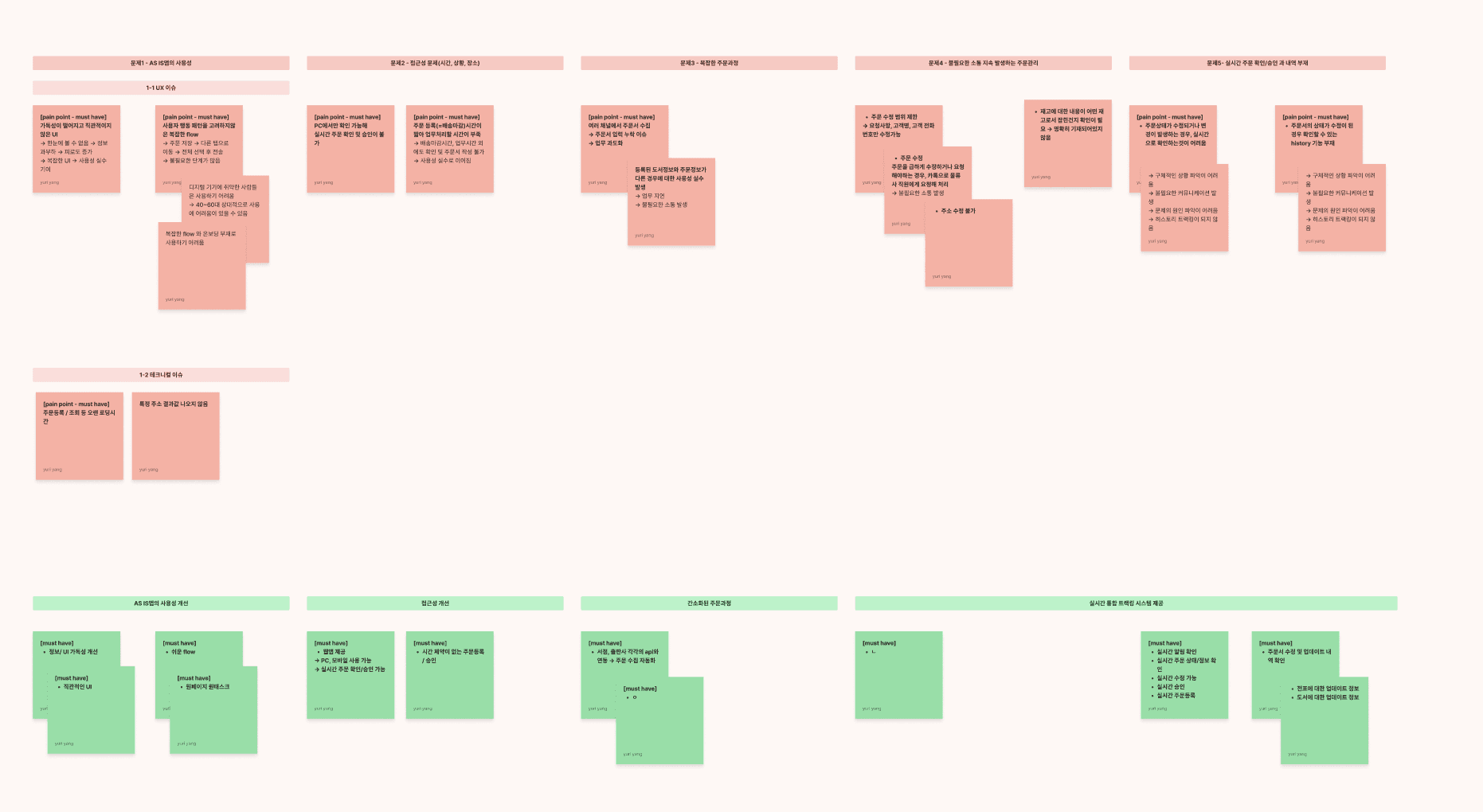
This made clear that orders were scattered across channels, changes happened manually, and publishers were overloaded acting as middlemen.
Orders came in through calls, spreadsheets, and emails, with no unified flow.
→ Result: Missed orders & high mental load on staff.
1. Fragmented Channels
This made clear that orders were scattered across channels, changes happened manually, and publishers were overloaded acting as middlemen.
Orders came in through calls, spreadsheets, and emails, with no unified flow.
→ Result: Missed orders & high mental load on staff.
1. Fragmented Channels
This made clear that orders were scattered across channels, changes happened manually, and publishers were overloaded acting as middlemen.
Orders came in through calls, spreadsheets, and emails, with no unified flow.
→ Result: Missed orders & high mental load on staff.
2. PC-Only, Legacy System
This made clear that orders were scattered across channels, changes happened manually, and publishers were overloaded acting as middlemen.
The OMS software could only be used on installed desktops.
→ 62% of users avoided it altogether, reverting to calls and messages.
2. PC-Only, Legacy System
This made clear that orders were scattered across channels, changes happened manually, and publishers were overloaded acting as middlemen.
The OMS software could only be used on installed desktops.
→ 62% of users avoided it altogether, reverting to calls and messages.
2. PC-Only, Legacy System
This made clear that orders were scattered across channels, changes happened manually, and publishers were overloaded acting as middlemen.
The OMS software could only be used on installed desktops.
→ 62% of users avoided it altogether, reverting to calls and messages.
3. No Real-Time Updates
This made clear that orders were scattered across channels, changes happened manually, and publishers were overloaded acting as middlemen.
Order edits or inventory checks required manual confirmation.
→ Delays and confusion were frequent, especially when stock ran out without notice.
3. No Real-Time Updates
This made clear that orders were scattered across channels, changes happened manually, and publishers were overloaded acting as middlemen.
Order edits or inventory checks required manual confirmation.
→ Delays and confusion were frequent, especially when stock ran out without notice.
3. No Real-Time Updates
This made clear that orders were scattered across channels, changes happened manually, and publishers were overloaded acting as middlemen.
Order edits or inventory checks required manual confirmation.
→ Delays and confusion were frequent, especially when stock ran out without notice.
❋Problem
What Users Actually Felt
Bookspider is a logistics and ordering platform that serves book publishers, bookstores, and warehouse operators across Korea. As the company scaled, its ordering management system became a bottleneck — outdated UI, scattered flows, and high error rates were slowing everyone down.
❋Problem
What Users Actually Felt
Bookspider is a logistics and ordering platform that serves book publishers, bookstores, and warehouse operators across Korea. As the company scaled, its ordering management system became a bottleneck — outdated UI, scattered flows, and high error rates were slowing everyone down.
❋Problem
What Users Actually Felt
Bookspider is a logistics and ordering platform that serves book publishers, bookstores, and warehouse operators across Korea. As the company scaled, its ordering management system became a bottleneck — outdated UI, scattered flows, and high error rates were slowing everyone down.
4
User's Opinions
View all
01
📉 Extremely Low Adoption
“We only use the app when we have no choice, otherwise, we just call.”
❌ No Visibility After Submission
📉 Extremely Low Adoption
📉 Extremely Low Adoption
📉 Extremely Low Adoption
💡 These insights made it clear:
"We needed a centralized system where everyone could place,
track, and update orders seamlessly."
4
User's Opinions
View all
01
📉 Extremely Low Adoption
“We only use the app when we have no choice, otherwise, we just call.”
❌ No Visibility After Submission
📉 Extremely Low Adoption
📉 Extremely Low Adoption
📉 Extremely Low Adoption
💡 These insights made it clear:
"We needed a centralized system where everyone could place,
track, and update orders seamlessly."
4
User's Opinions
View all
01
📉 Extremely Low Adoption
“We only use the app when we have no choice, otherwise, we just call.”
❌ No Visibility After Submission
📉 Extremely Low Adoption
📉 Extremely Low Adoption
📉 Extremely Low Adoption
💡 These insights made it clear:
"We needed a centralized system where everyone could place,
track, and update orders seamlessly."
❋Problem
Streamline the ordering experience end-to-end: Not just for users, but for the business itself
Through data analysis, we discovered that new influencer users in the app have a low campaign participation
rate compared to their sign-up rate. To address this issue, we examined the following data:
❋Problem
Streamline the ordering experience end-to-end: Not just for users, but for the business itself
Through data analysis, we discovered that new influencer users in the app have a low campaign participation
rate compared to their sign-up rate. To address this issue, we examined the following data:
❋Problem
Streamline the ordering experience end-to-end: Not just for users, but for the business itself
Through data analysis, we discovered that new influencer users in the app have a low campaign participation
rate compared to their sign-up rate. To address this issue, we examined the following data:
❋Problem
A comprehensive redesign that aligned system functionality with real user workflows, supported by improved team collaboration and data-driven design decisions
Through data analysis, we discovered that new influencer users in the app have a low campaign participation
rate compared to their sign-up rate. To address this issue, we examined the following data:
❋Problem
A comprehensive redesign that aligned system functionality with real user workflows, supported by improved team collaboration and data-driven design decisions
Through data analysis, we discovered that new influencer users in the app have a low campaign participation
rate compared to their sign-up rate. To address this issue, we examined the following data:
❋Problem
A comprehensive redesign that aligned system functionality with real user workflows, supported by improved team collaboration and data-driven design decisions
Through data analysis, we discovered that new influencer users in the app have a low campaign participation
rate compared to their sign-up rate. To address this issue, we examined the following data:
-Increasing anxiety competition rate
-Lack of motivational information
-Lack of preferences & Unnoticeable filter
-Increasing anxiety competition rate
-Lack of motivational information
-Lack of preferences & Unnoticeable filter
-Detailed match with personal interest & Easy to access
-Encouraging application feature
-Well-organized & intuitive beneficial information
-Detailed match with personal interest & Easy to access
-Encouraging application feature
-Well-organized & intuitive beneficial information
❋Design Process
How I Solved for Clarity in a Complex Workflow
❋Design Process
How I Solved for Clarity in a Complex Workflow
❋Design Process
How I Solved for Clarity in a Complex Workflow
1
1
1
2
2
2
3
3
3
4
4
4
🔍 Research & Discovery: Mapping the Real Friction
I started by investigating the behavior behind the breakdown:Shadowed bookstore staff during submissionsInterviewed warehouse workers and CS teamAnalyzed recurring support tickets
I started by investigating the
I started by investigating the
I started by investigating the
I started by investigating the
I started by investigating the
I started by investigating the
🔍 Research & Discovery: Mapping the Real Friction
I started by investigating the behavior behind the breakdown:Shadowed bookstore staff during submissionsInterviewed warehouse workers and CS teamAnalyzed recurring support tickets
I started by investigating the
I started by investigating the
I started by investigating the
I started by investigating the
I started by investigating the
I started by investigating the
🔍 Research & Discovery: Mapping the Real Friction
I started by investigating the behavior behind the breakdown:Shadowed bookstore staff during submissionsInterviewed warehouse workers and CS teamAnalyzed recurring support tickets
I started by investigating the
I started by investigating the
I started by investigating the
I started by investigating the
I started by investigating the
I started by investigating the
⚠️ Communication Breakdown: Diagnosing the Deeper Problem
I started by investigating the behavior behind the breakdown:Shadowed bookstore staff during submissionsInterviewed warehouse workers and CS teamAnalyzed recurring support tickets
I started by investigating the
I started by investigating the
I started by investigating the
I started by investigating the
I started by investigating the
I started by investigating the
⚠️ Communication Breakdown: Diagnosing the Deeper Problem
I started by investigating the behavior behind the breakdown:Shadowed bookstore staff during submissionsInterviewed warehouse workers and CS teamAnalyzed recurring support tickets
I started by investigating the
I started by investigating the
I started by investigating the
I started by investigating the
I started by investigating the
I started by investigating the
⚠️ Communication Breakdown: Diagnosing the Deeper Problem
I started by investigating the behavior behind the breakdown:Shadowed bookstore staff during submissionsInterviewed warehouse workers and CS teamAnalyzed recurring support tickets
I started by investigating the
I started by investigating the
I started by investigating the
I started by investigating the
I started by investigating the
I started by investigating the
✏️ Ideation: Designing for Simplicity and Confidence
I started by investigating the behavior behind the breakdown:Shadowed bookstore staff during submissionsInterviewed warehouse workers and CS teamAnalyzed recurring support tickets
I started by investigating the
I started by investigating the
I started by investigating the
I started by investigating the
I started by investigating the
I started by investigating the
✏️ Ideation: Designing for Simplicity and Confidence
I started by investigating the behavior behind the breakdown:Shadowed bookstore staff during submissionsInterviewed warehouse workers and CS teamAnalyzed recurring support tickets
I started by investigating the
I started by investigating the
I started by investigating the
I started by investigating the
I started by investigating the
I started by investigating the
✏️ Ideation: Designing for Simplicity and Confidence
I started by investigating the behavior behind the breakdown:Shadowed bookstore staff during submissionsInterviewed warehouse workers and CS teamAnalyzed recurring support tickets
I started by investigating the
I started by investigating the
I started by investigating the
I started by investigating the
I started by investigating the
I started by investigating the
🔁 Testing & Iteration: From Concept to Confidence
I started by investigating the behavior behind the breakdown:Shadowed bookstore staff during submissionsInterviewed warehouse workers and CS teamAnalyzed recurring support tickets
I started by investigating the
I started by investigating the
I started by investigating the
I started by investigating the
I started by investigating the
I started by investigating the
🔁 Testing & Iteration: From Concept to Confidence
I started by investigating the behavior behind the breakdown:Shadowed bookstore staff during submissionsInterviewed warehouse workers and CS teamAnalyzed recurring support tickets
I started by investigating the
I started by investigating the
I started by investigating the
I started by investigating the
I started by investigating the
I started by investigating the
🔁 Testing & Iteration: From Concept to Confidence
I started by investigating the behavior behind the breakdown:Shadowed bookstore staff during submissionsInterviewed warehouse workers and CS teamAnalyzed recurring support tickets
I started by investigating the
I started by investigating the
I started by investigating the
I started by investigating the
I started by investigating the
I started by investigating the
❋Design Process
🔍 Research & Discovery: Mapping the Real Friction
I began by immersing myself in the existing system. I didn’t assume the UI was the problem,I looked for behavior gaps, system inconsistencies, and operational breakdowns.
❋Design Process
🔍 Research & Discovery: Mapping the Real Friction
I began by immersing myself in the existing system. I didn’t assume the UI was the problem,I looked for behavior gaps, system inconsistencies, and operational breakdowns.
❋Design Process
🔍 Research & Discovery: Mapping the Real Friction
I began by immersing myself in the existing system. I didn’t assume the UI was the problem,I looked for behavior gaps, system inconsistencies, and operational breakdowns.
❋Design Process
Test & Improvement
We ran a two-week A/B test with internal influencers for 2 weeks in August,
and the data showed Concept B drove greater user engagement. The detailed results are below:
❋Design Process
Test & Improvement
We ran a two-week A/B test with internal influencers for 2 weeks in August,
and the data showed Concept B drove greater user engagement. The detailed results are below:
❋Design Process
Test & Improvement
We ran a two-week A/B test with internal influencers for 2 weeks in August,
and the data showed Concept B drove greater user engagement. The detailed results are below:
-Increasing anxiety competition rate
-Lack of motivational information
-Lack of preferences & Unnoticeable filter
-Detailed match with personal interest & Easy to access
-Encouraging application feature
-Well-organized & intuitive beneficial information
❋Design Process
Test & Improvement
We ran a two-week A/B test with internal influencers for 2 weeks in August,
and the data showed Concept B drove greater user engagement. The detailed results are below:
❋Design Process
Test & Improvement
We ran a two-week A/B test with internal influencers for 2 weeks in August,
and the data showed Concept B drove greater user engagement. The detailed results are below:
❋Design Process
Test & Improvement
We ran a two-week A/B test with internal influencers for 2 weeks in August,
and the data showed Concept B drove greater user engagement. The detailed results are below:
-Increasing anxiety competition rate
-Lack of motivational information
-Lack of preferences & Unnoticeable filter
-Detailed match with personal interest & Easy to access
-Encouraging application feature
-Well-organized & intuitive beneficial information
❋Result
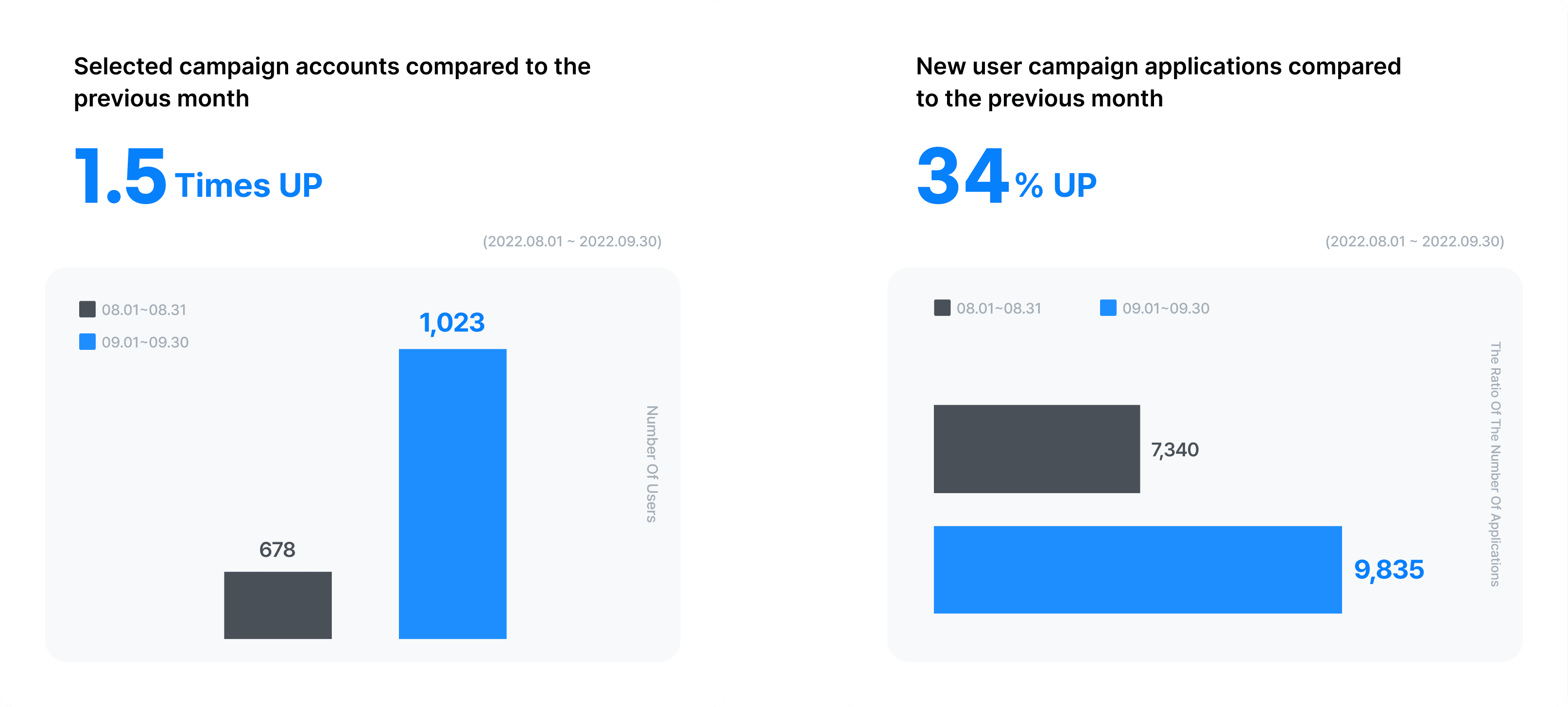
Selection and application rates doubled, making a significant impact
We designed our approach by applying the theory of the psychological effects of slot machines to our hypothesis,
aiming to increase influencer’s campaign application rates by providing successful experiences through appropriate rewards. This resulted in increased numbers of
selected accounts and campaign application rates, demonstrating successful outcomes.
❋Result
Selection and application rates doubled, making a significant impact
We designed our approach by applying the theory of the psychological effects of slot machines to our hypothesis,
aiming to increase influencer’s campaign application rates by providing successful experiences through appropriate rewards. This resulted in increased numbers of
selected accounts and campaign application rates, demonstrating successful outcomes.
❋Result
Selection and application rates doubled, making a significant impact
We designed our approach by applying the theory of the psychological effects of slot machines to our hypothesis,
aiming to increase influencer’s campaign application rates by providing successful experiences through appropriate rewards. This resulted in increased numbers of
selected accounts and campaign application rates, demonstrating successful outcomes.
Next Project