Home
SSOKDAK
AI Female Mental Wellness Social Networking App
From Behavior to Meaning: Designing Psychological UX to Pivot Product Strategy
Improved Refining the System Flow:
+
84%
User's satisfaction
+
20.5%
Improved engagement
+
12%
Increased the accuracy of the matching system


APP / 23.03 - 23.07
beta test / 23.06 - 23.06
Type /
Native App
App Design Lead
Designing a new app based on user experience
principles and service concepts, aiming to achieve
an 80% user satisfaction rate during beta testing.
Team
PM, 디자이너(1명), 개발자(1명)
마케터, 콘텐츠 디자이너(1명)
Role commitment
UX Design 100%
UI Design 100%
BX Design 100%
Illustration Design 80%
ssok dak
ssok dak


Product
Android App
My Role
Design Lead
Product
Designing from the scratch
Terms
2023.03 - 2023.09
Team
PM, Developers, Marketer, Designers, Psychologist
skills
Stakeholder Management, Product Strategy, User Research & Competitor Analysis,
Interactive prototyping, Usability Testing, Branding Design,
desk research
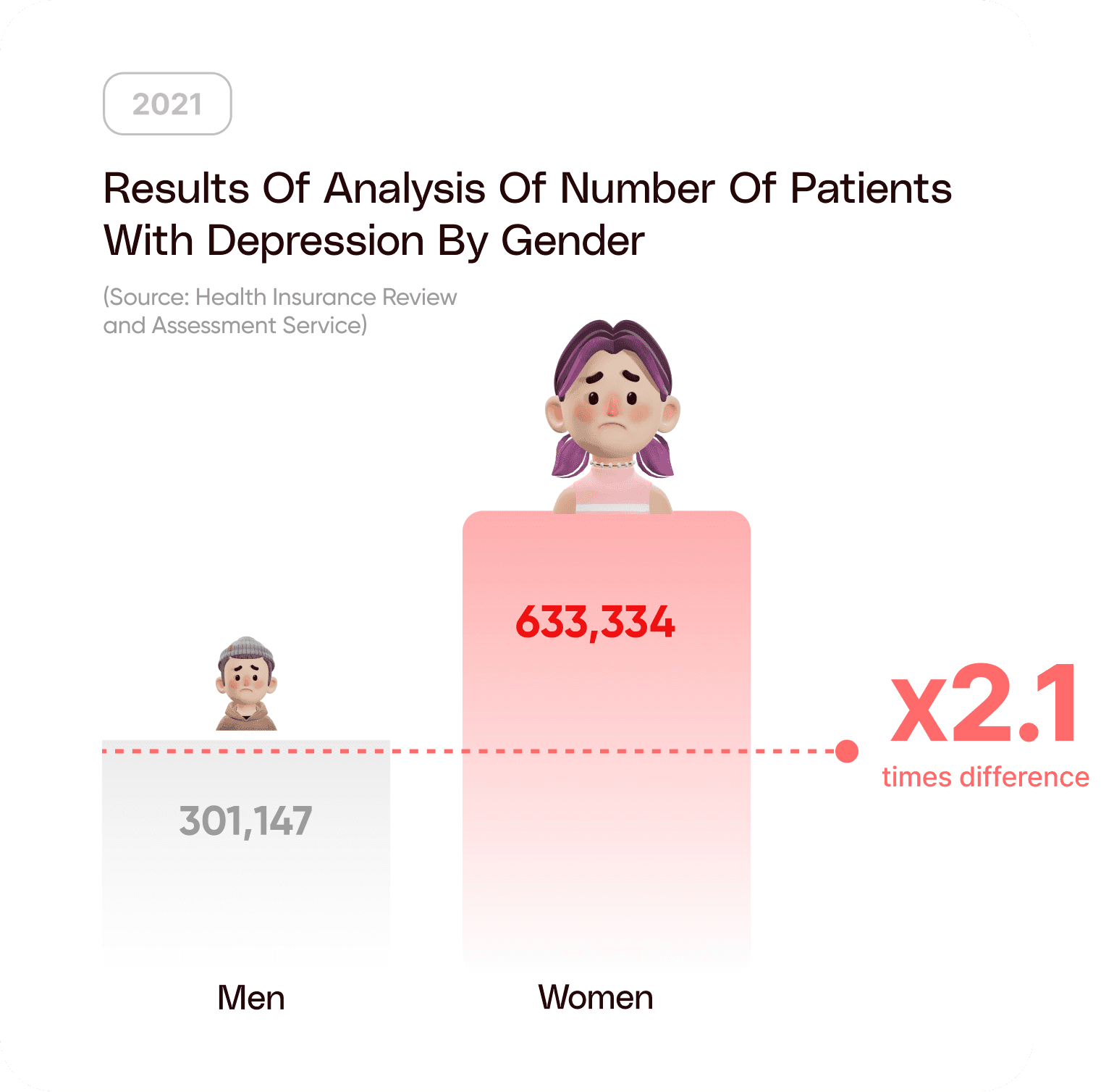
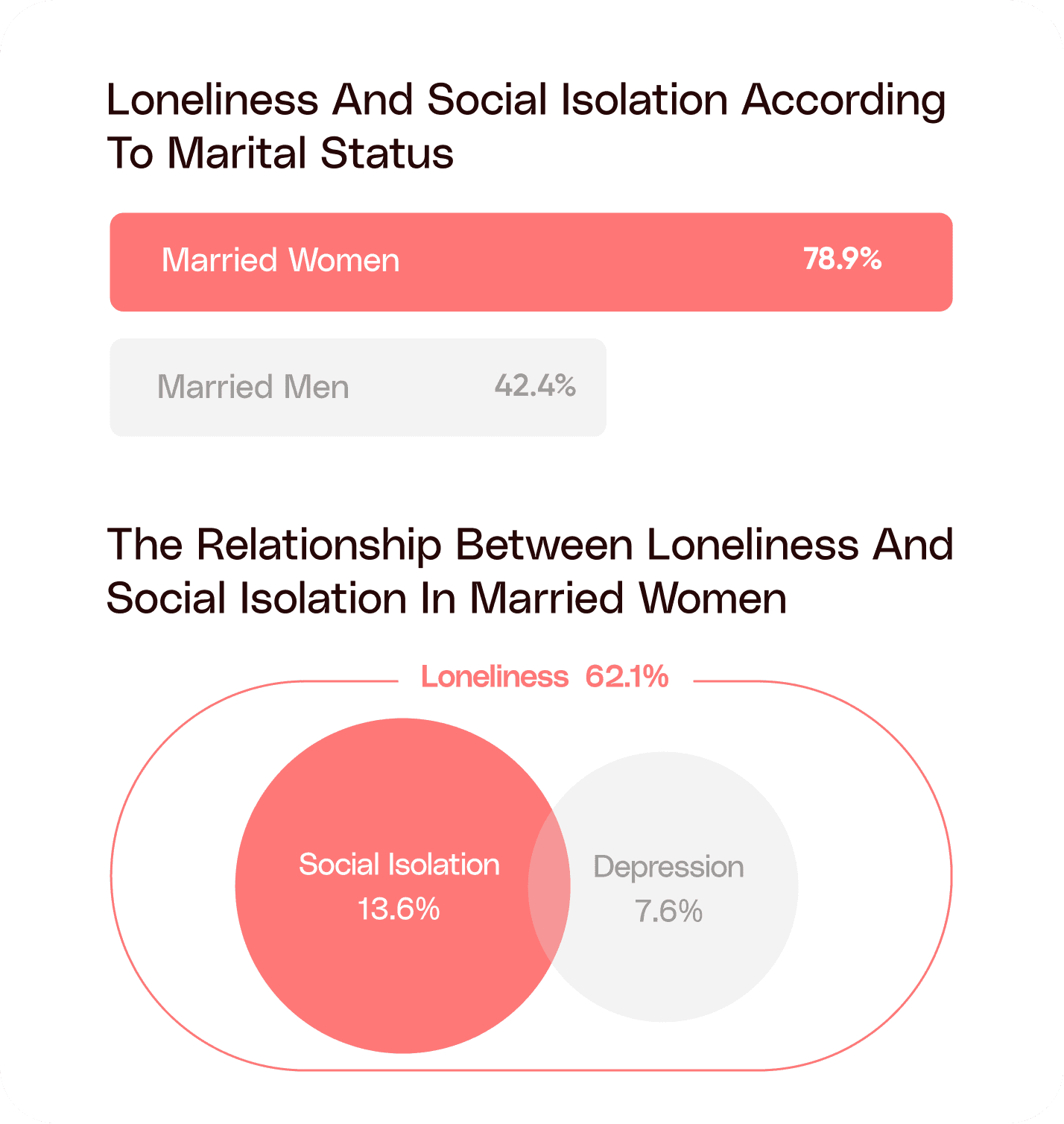
The depression rate among women is 2.1 times
higher
78.9% emotional isolation rate
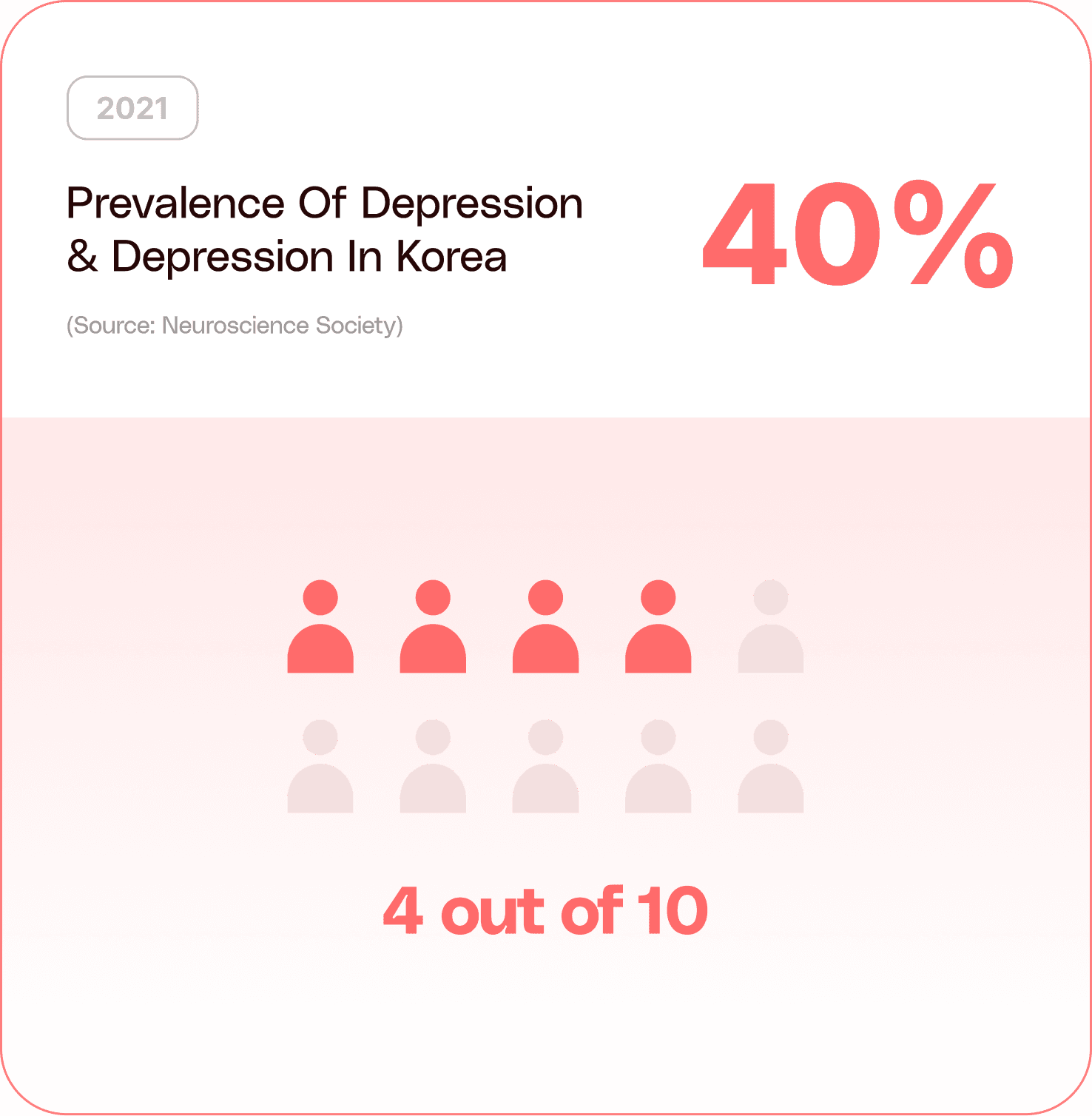
Depression is a major issue in Korean society, affecting nearly half the population, with women experiencing it twice as often as men.
Desk research revealed that 78% of married women struggle with loneliness and social isolation, highlighting the urgency of addressing female mental health.
user interview
Why Married Women Feel Lonely Despite
Abundant Communication Tools?
We began with a simple but critical question:
Why does psychological loneliness persist even when communication is constant?
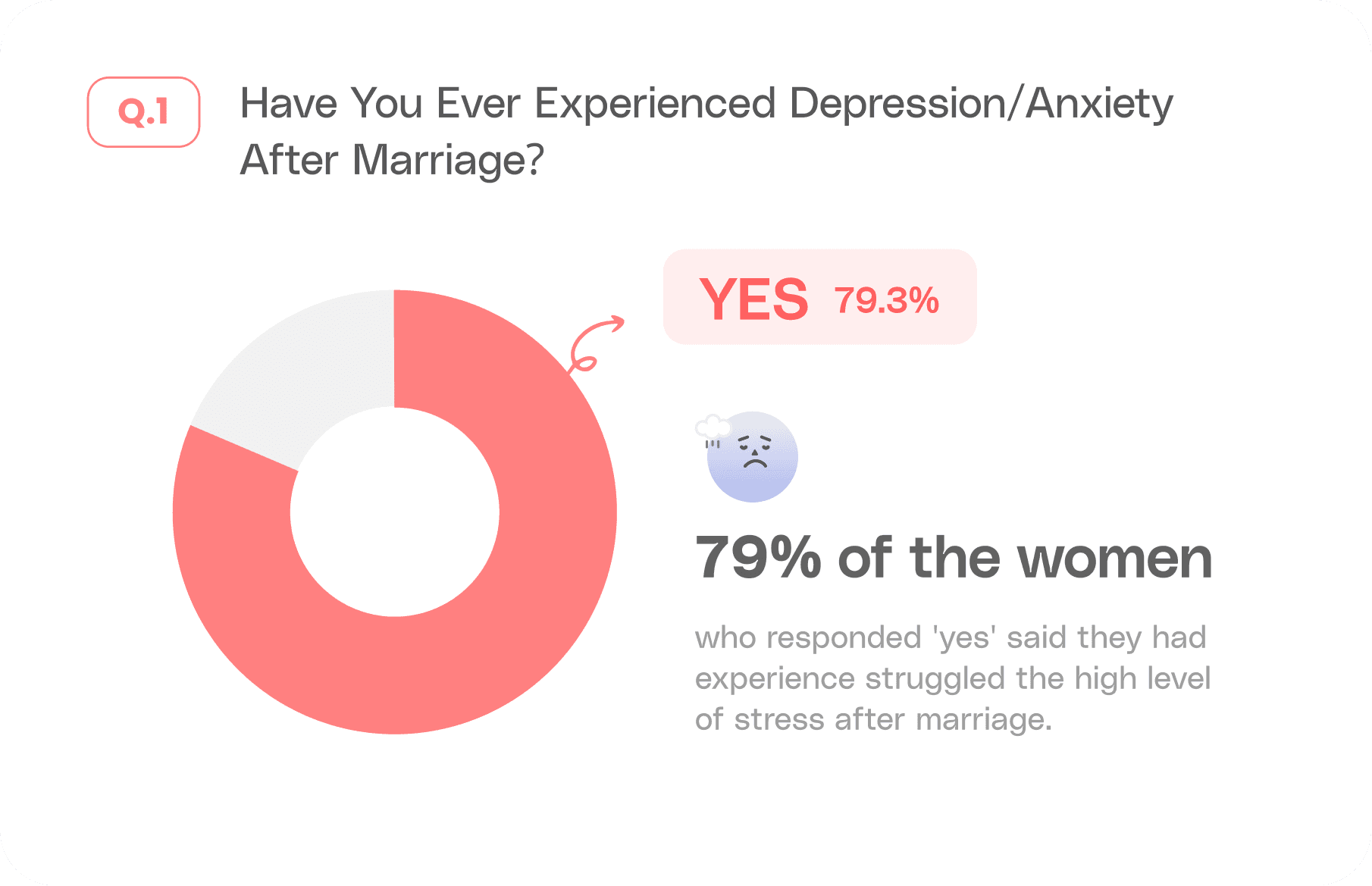
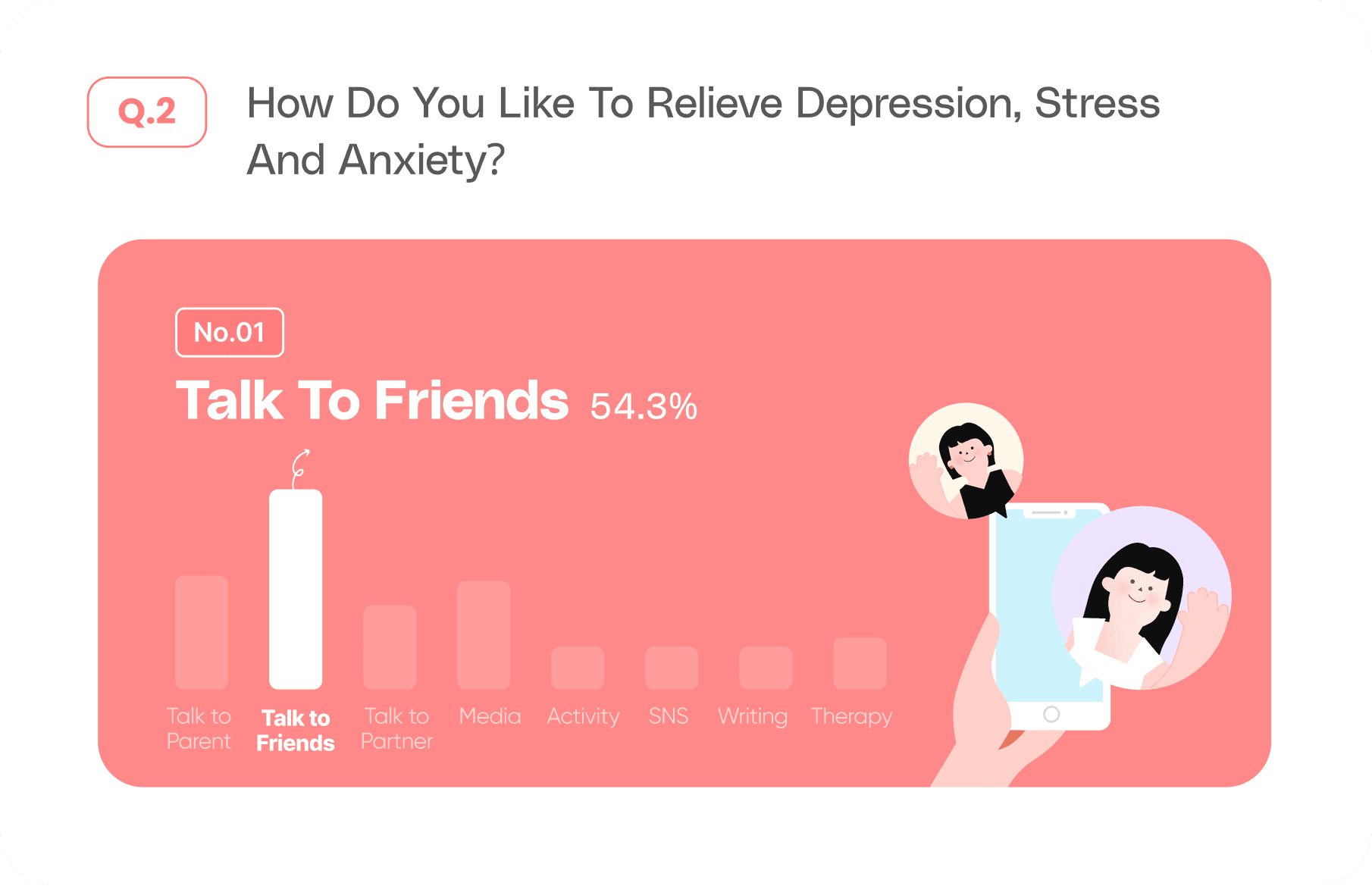
Married women are surrounded by family, social networks, and messaging platforms, yet many still report feeling emotionally unheard. To understand this gap, I conducted a one-week user survey with 60 married women aged 20s-60s,
focusing not on how often they communicate, but how their inner experiences are processed, shared, or left unexpressed.
who
A total of 60 married women ranging from
their 20s to 60s
when
23.04.17 - 23.04.23
how
User Survey
point
Understanding user needs and
deriving insights
Insights :
Loneliness persists not because users lack ways to talk, but because existing systems fail to match and sustain conversations at the psychological level.
Emotional distress after marriage is widespread, not marginal
+
View More
Talking is the primary coping mechanism, but not an effective one
+
View More
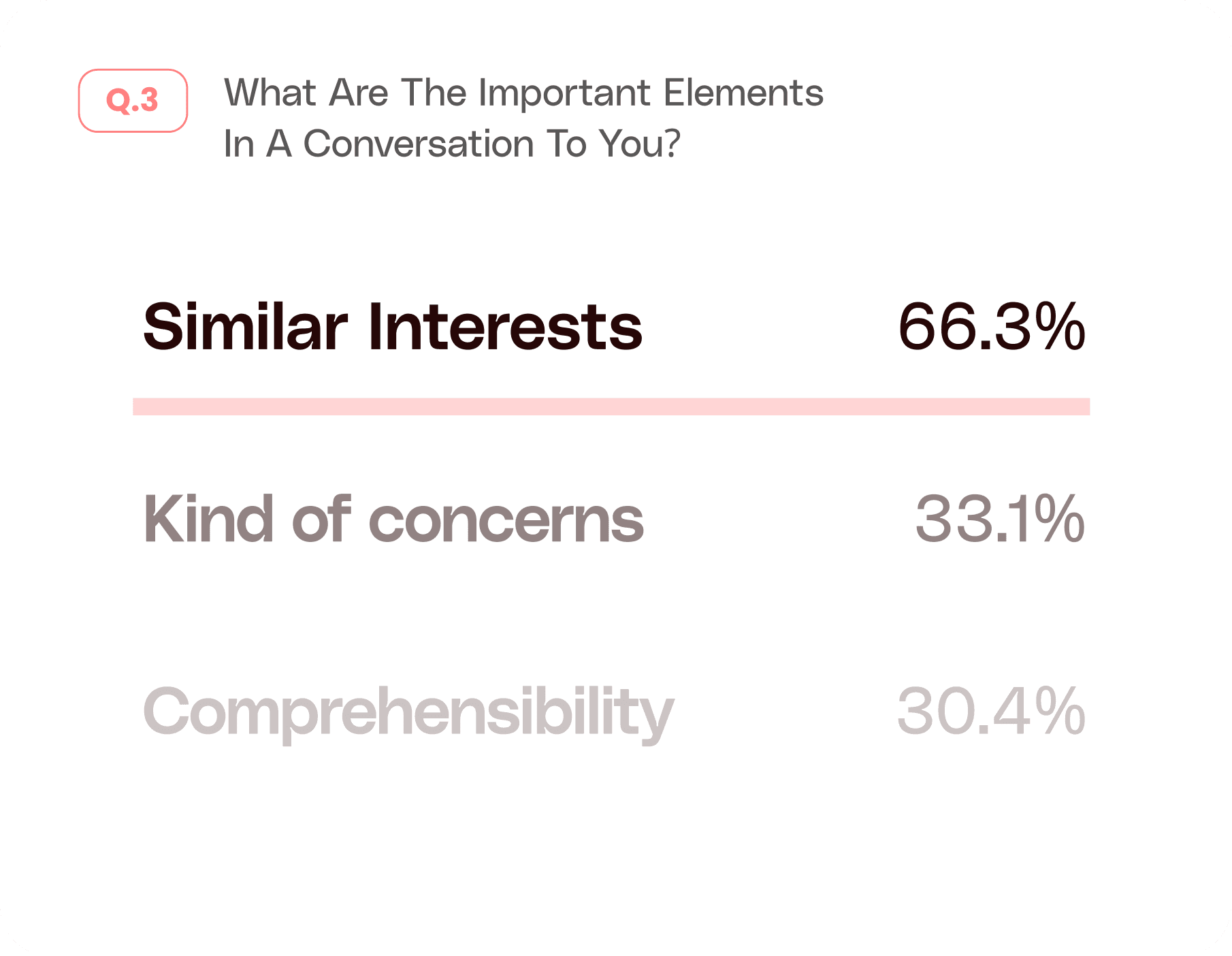
Users seek emotional alignment, not surface similarity
+
View More
High communication frequency does not reduce loneliness
+
View More
The core friction is meaning mismatch, not usability
+
View More
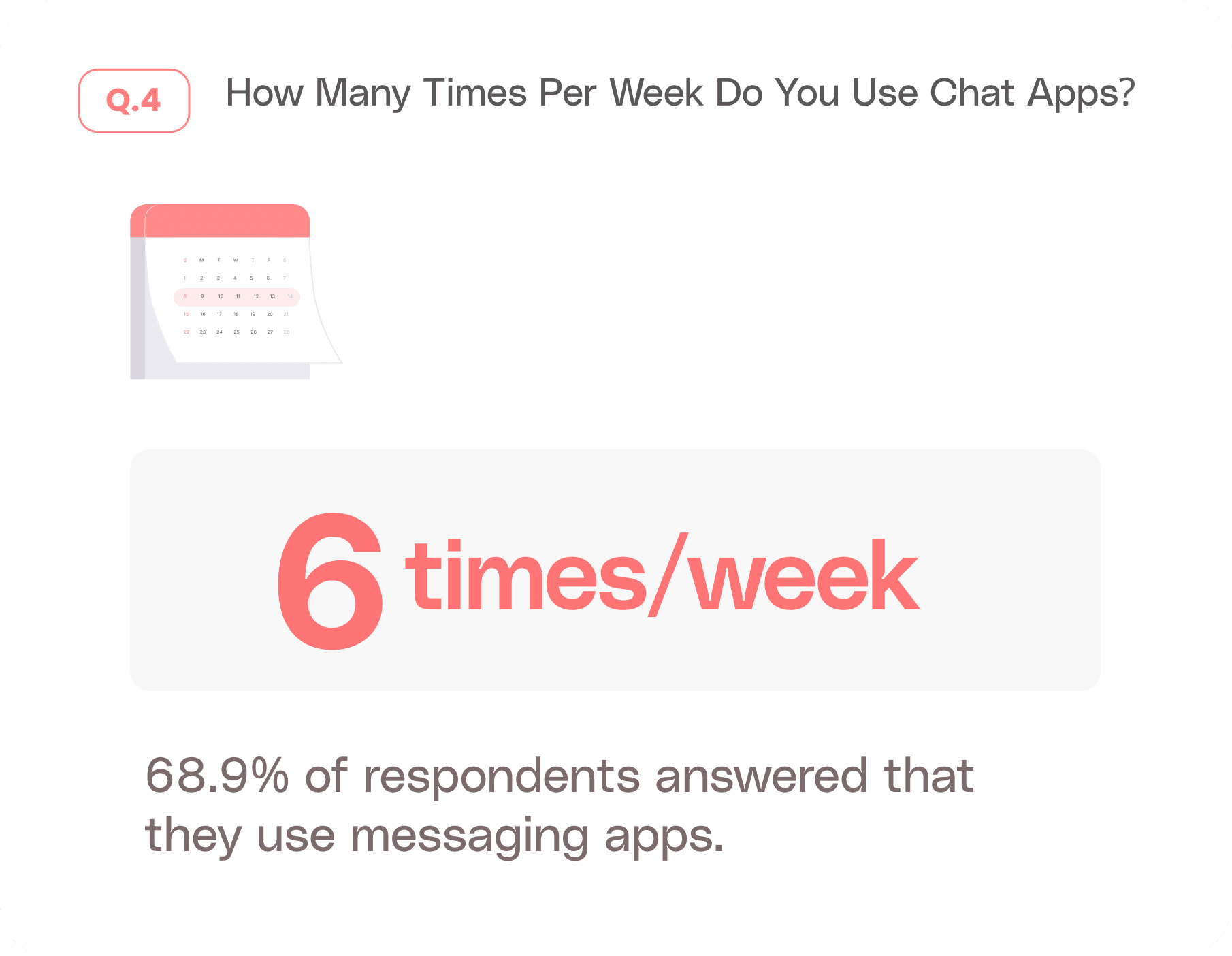
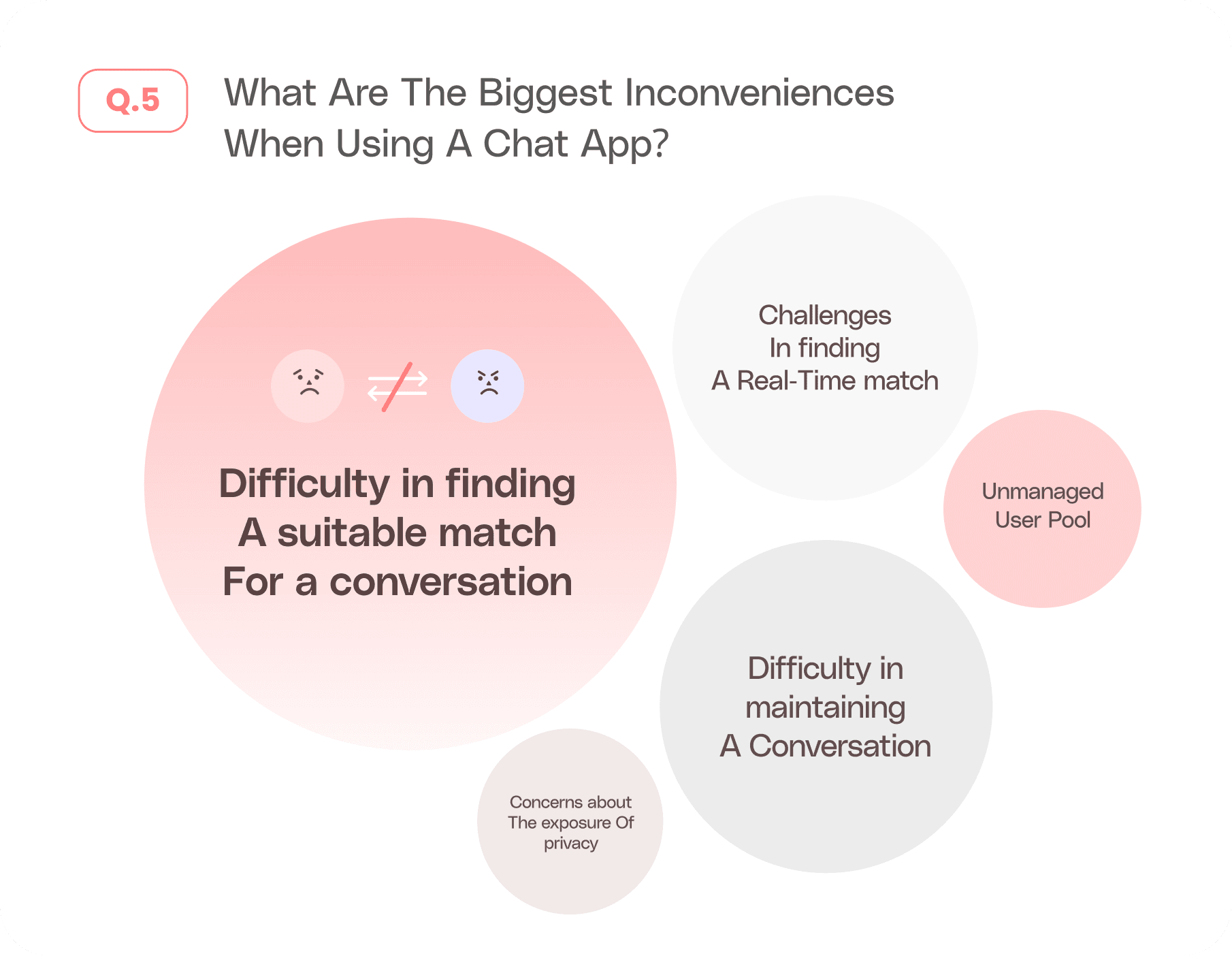
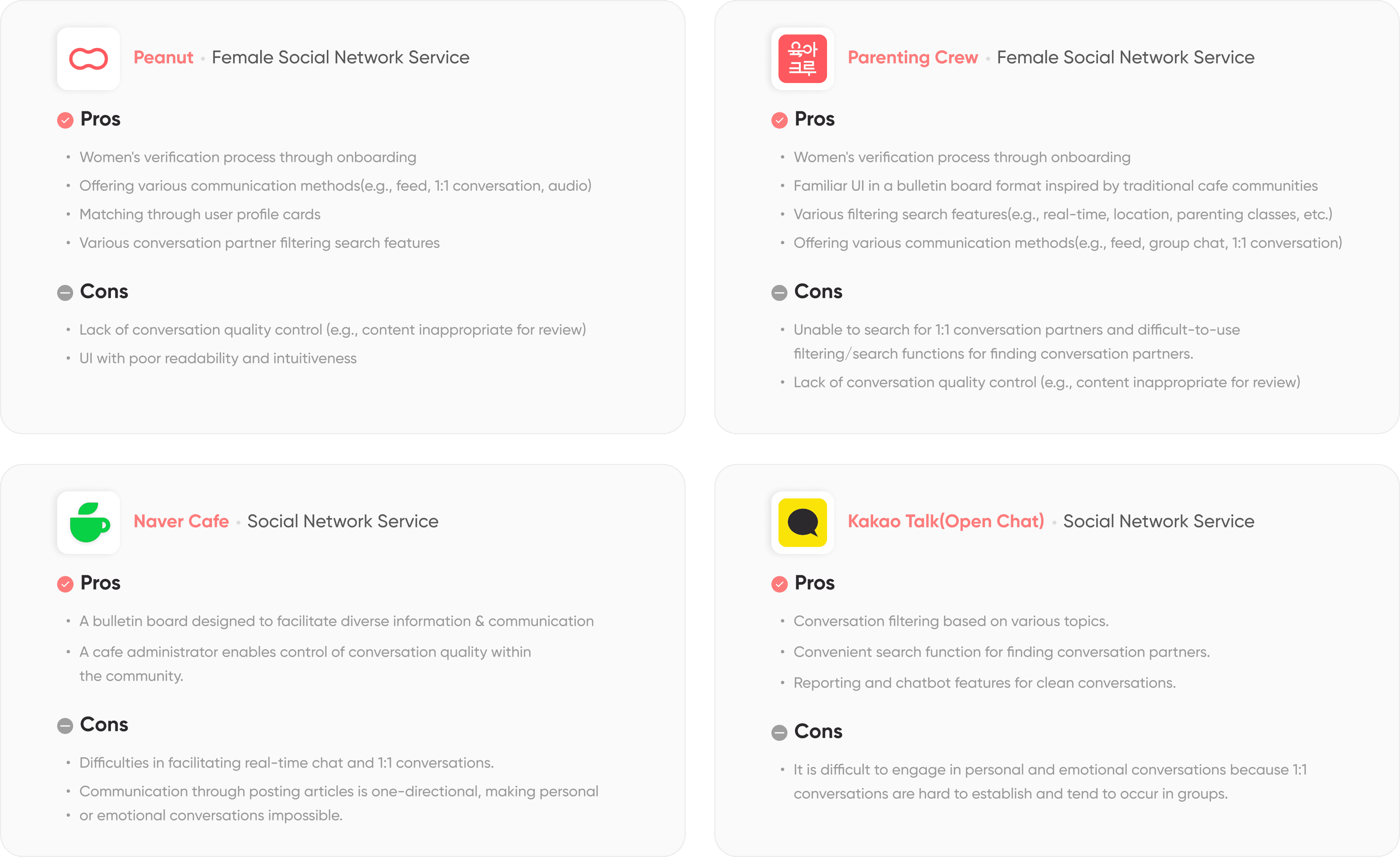
Competitor Analysis
Building Trust & Connection: A Smarter, Safer Conversation Experience
01
Women's verification process
through onboarding
Guidance on the identity of women-only communities and verification of users' identities.
02
AI Various filtering & search
features to find partners
Guidance on the identity of
women-only communities and
verification of users' identities.
03
real-time conversation
matching
UI notation for real-time conversation
matching and sorting settings.
04
Management system needed for
clean conversations
Provision of reporting functions and
AI-managed clean system features.
Challenge
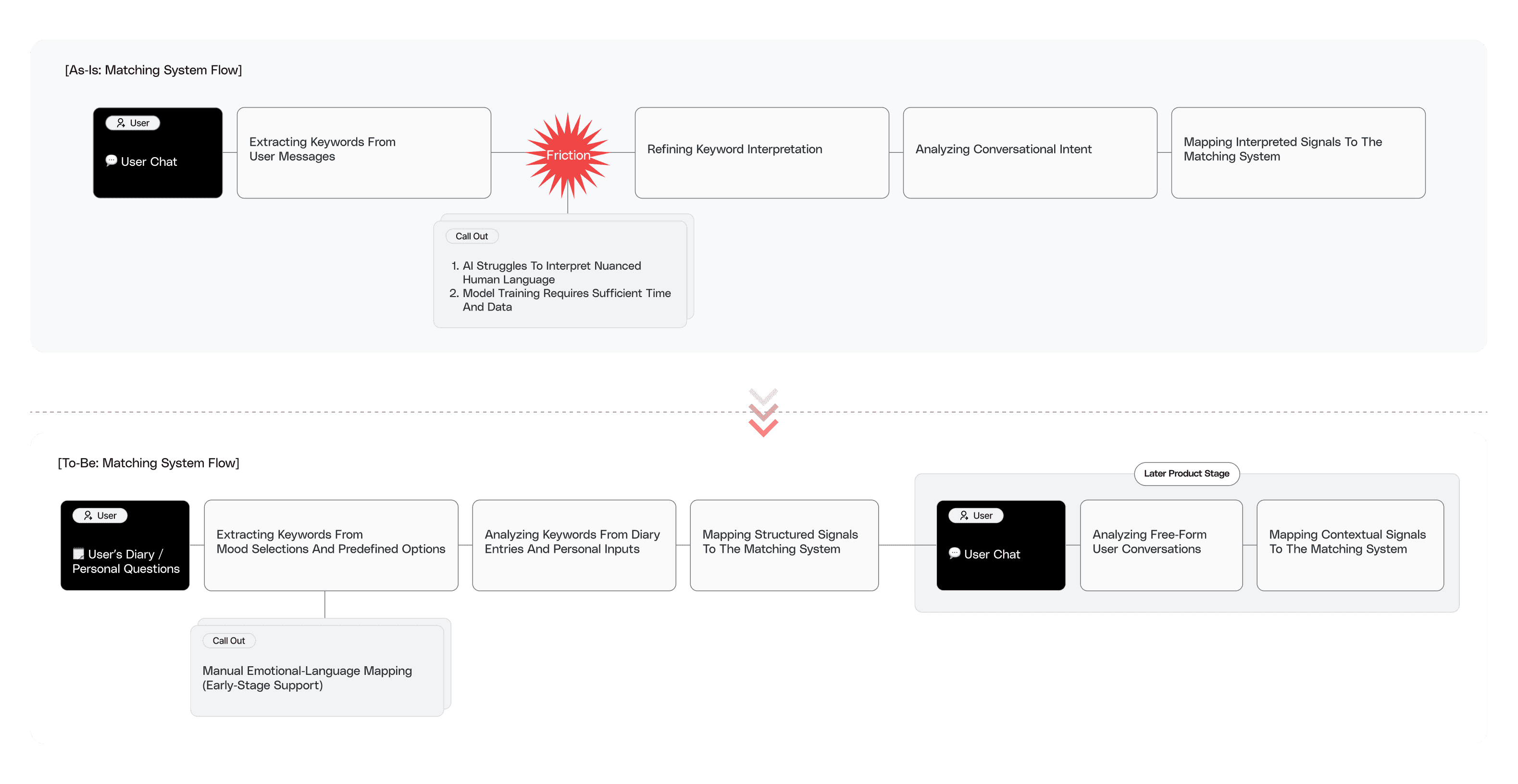
How might we build a matching system that understands nuanced language and infers reliable psychological signals, even with limited data?
We introduced AI to enhance the accuracy of the matching system by analyzing chat histories.
However, as an early-stage product, we faced a fundamental limitation: The lack of sufficient, high-quality data.
01
Human Language Is Ambiguous and Contextual
User inputs contained metaphors, emotional contradictions, and implicit meanings that could not be easily reduced to keywords without losing intent.
02
Manual Query Mapping Did Not Scale
To stabilize the system, we initially attempted to map user expressions into predefined categories. However, covering the full range of emotional language quickly became unmanageable and brittle.
03
Early-Stage Data Was Insufficient
With limited user volume, the AI lacked enough examples to learn reliable language–emotion mappings, amplifying prediction variance.
Hypothesis
Enhancing Matching Accuracy by Pivoting from Chat-Based Signals to
Diary-Based Expression with onboarding process
03
Design for Longitudinal Signals, Not One-Off Inputs
04
Constrain AI Interpretation with UX Guardrails
01
Stabilizing AI Matching Through Diary-Based Signals and Intentional Onboarding
02
Replace “Keywords” with “Psychological Signal Buckets”
user Persona
Two Emotional Needs, Two Paths: Connection vs Self-Processing
Thus, improving mission engagement requires a solution that boosts influencer motivation without interfering with client-side
selection behavior, making stakeholder cooperation and strategic alignment essential.
01
Chat
Am I the only one feeling this way? I want to talk to someone who can relate!

02
diary
I want to understand my emotions better! Should I record the feelings I experienced today?

Test & improvement
Enhance the diary experience, shortcutting check-in the mood
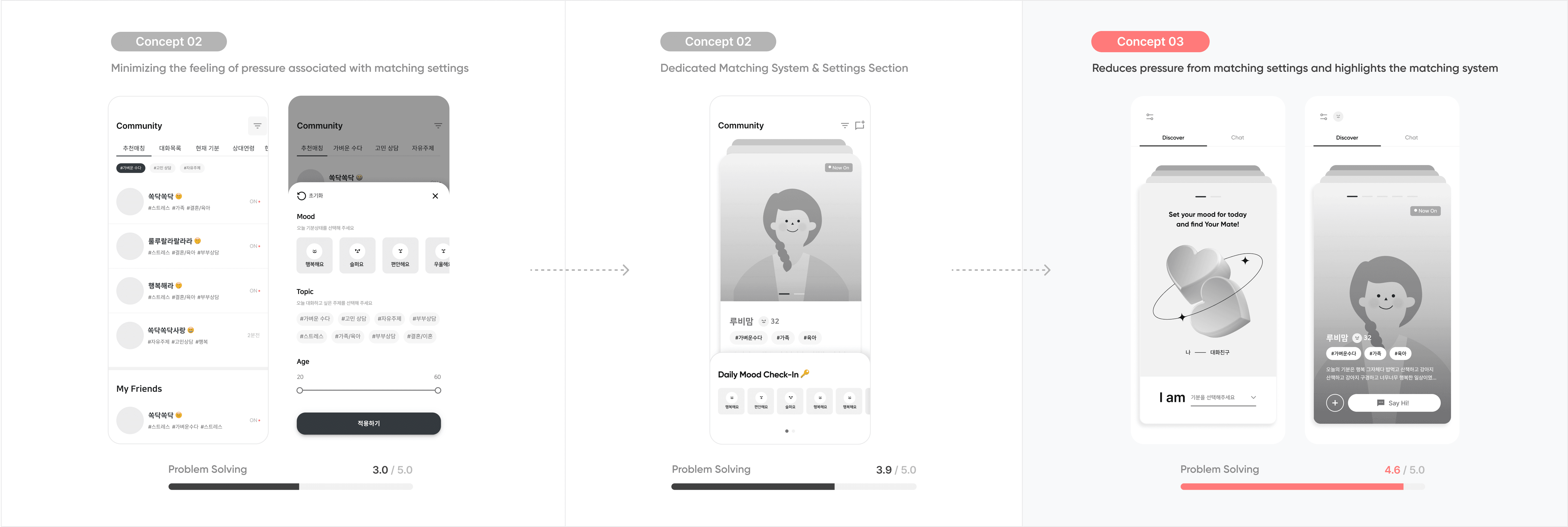
The matching settings feature and ideation for chat screen layouts were conducted,
and screen-specific mockups were derived for A/B testing. As a result, the current conversation
matching settings and chat interface have been finalized.
solution 01
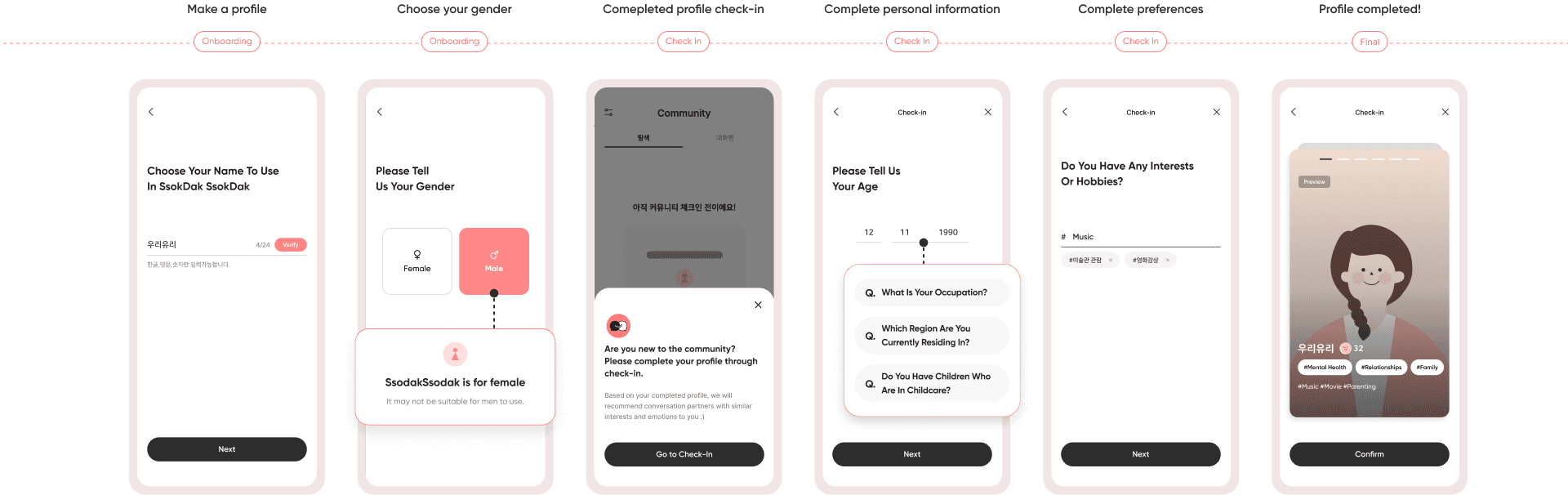
Onboarding Process
Creating a Safe and Personalized Space for Meaningful Conversations
solution 01
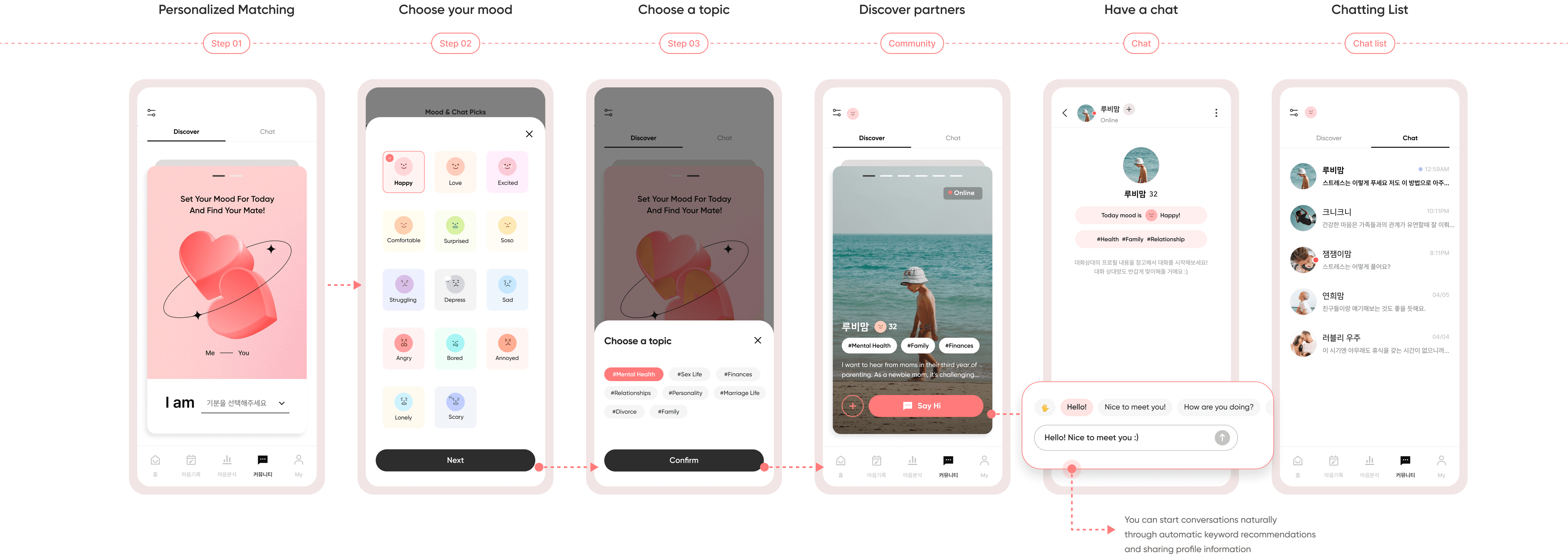
AI Partner Matching
Creating a Safe and Personalized Space for Meaningful Conversations
To ensure a secure and welcoming environment for women, I designed the onboarding experience with a thoughtful verification process, confirming identity through questions tailored specifically to women's experiences.
I made connecting easier by letting AI match users based on mood and interests. To ease conversation, profile cards highlight key topics, so starting a chat feels natural—even for shy users.
solution 02
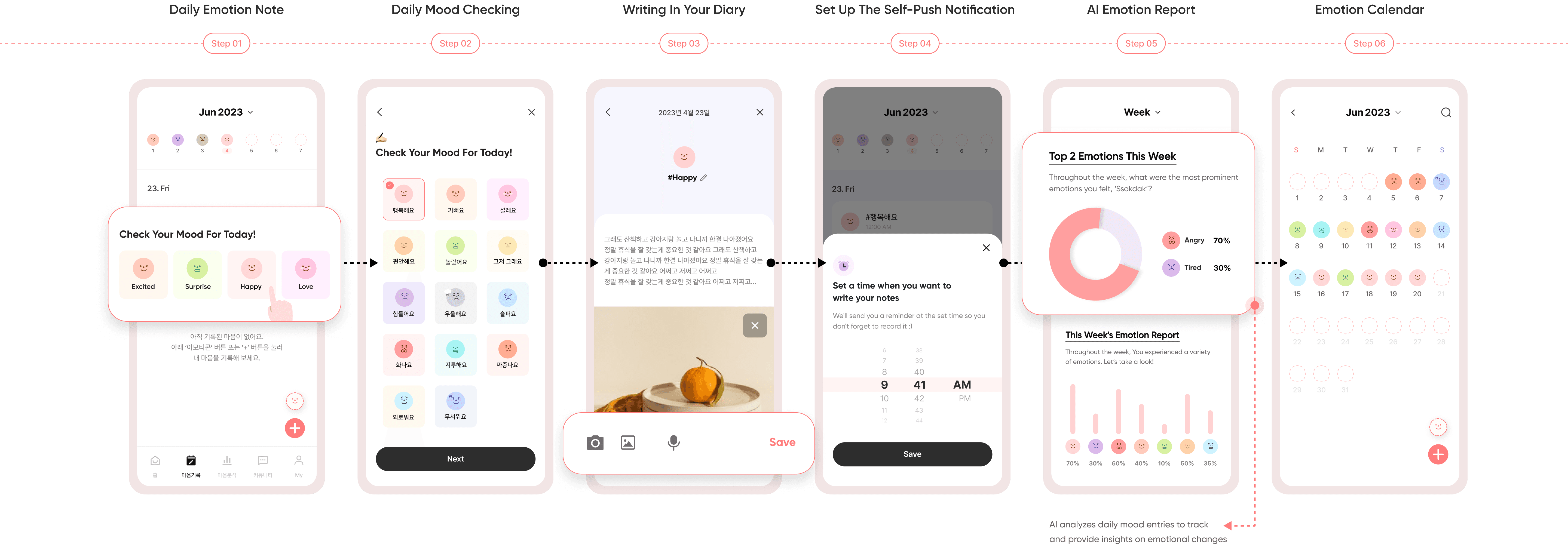
Daily emotion note
Efforeless Emotion Recording & AI Emotion Analysis
To make daily emotion tracking effortless, I replaced long journal entries with emoji stickers and a calendar history, making self-reflection quick and intuitive. To build a journaling habit, I added reminder set up while AI-powered reports with mood graphs and keyword analysis provide deeper insights without extra effort.
design system
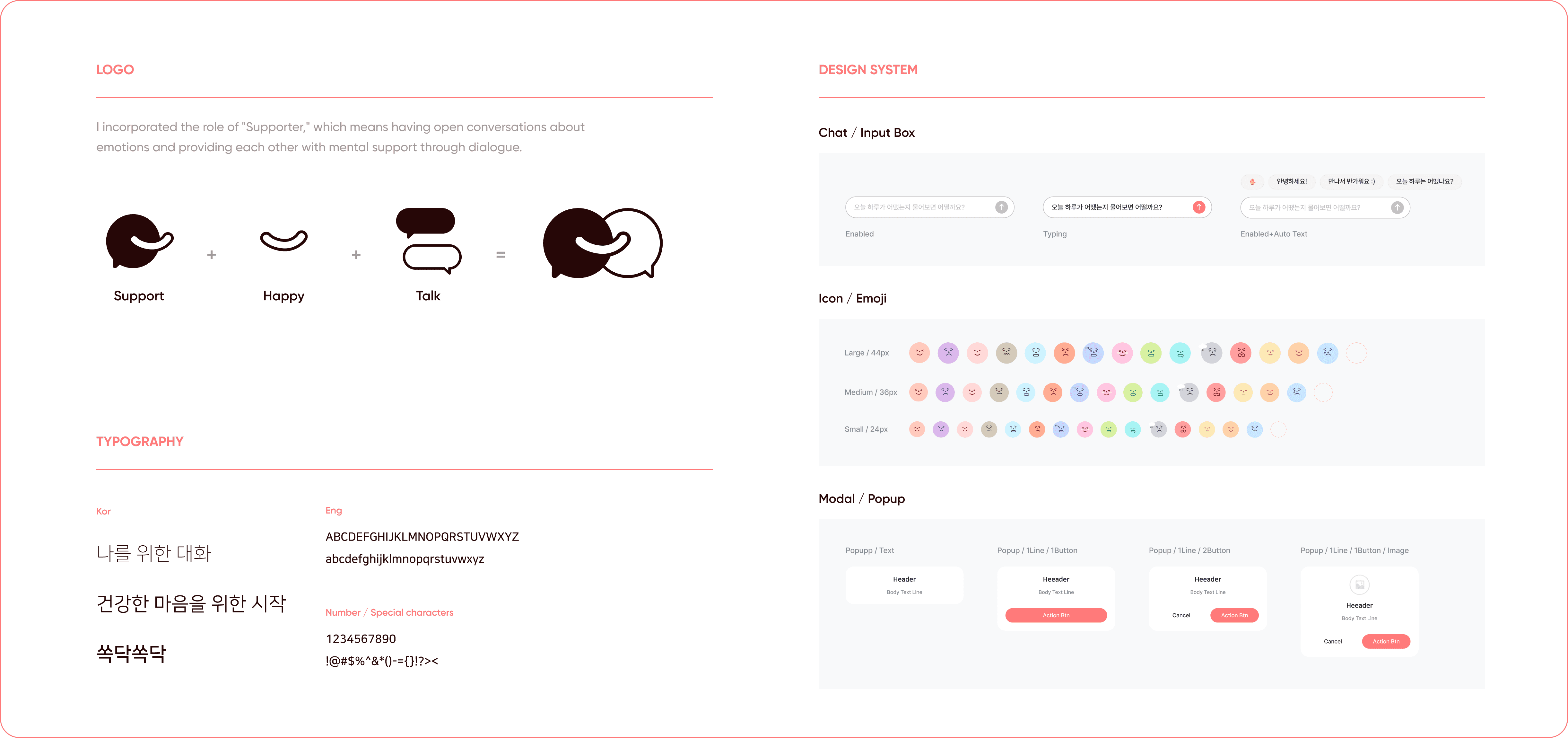
Designing for Emotional Comfort : A Soft and Cute Theme
That Creates a Safe Space for Korean Women
A warm pink palette with rounded shapes creates psychological comfort and a cozy, empathetic feel, aligning with research showing 95% of Korean female users prefer friendly visuals and adhering to Material Design accessibility guidelines.
Achivement & Reflection
The user satisfaction rate is 84%
After conducting around 200 beta tests, we achieved our initial goal of 100% user satisfaction. The results revealed a strong user desire for more expressive communication.
Usage patterns showed frequent reliance on system emojis in chat, leading us to enhance emoji-based emotional expression. Building on this insight, we further explored the feasibility and scalability of audio messaging to support richer communication needs.
Next Project